.webp)
.png)
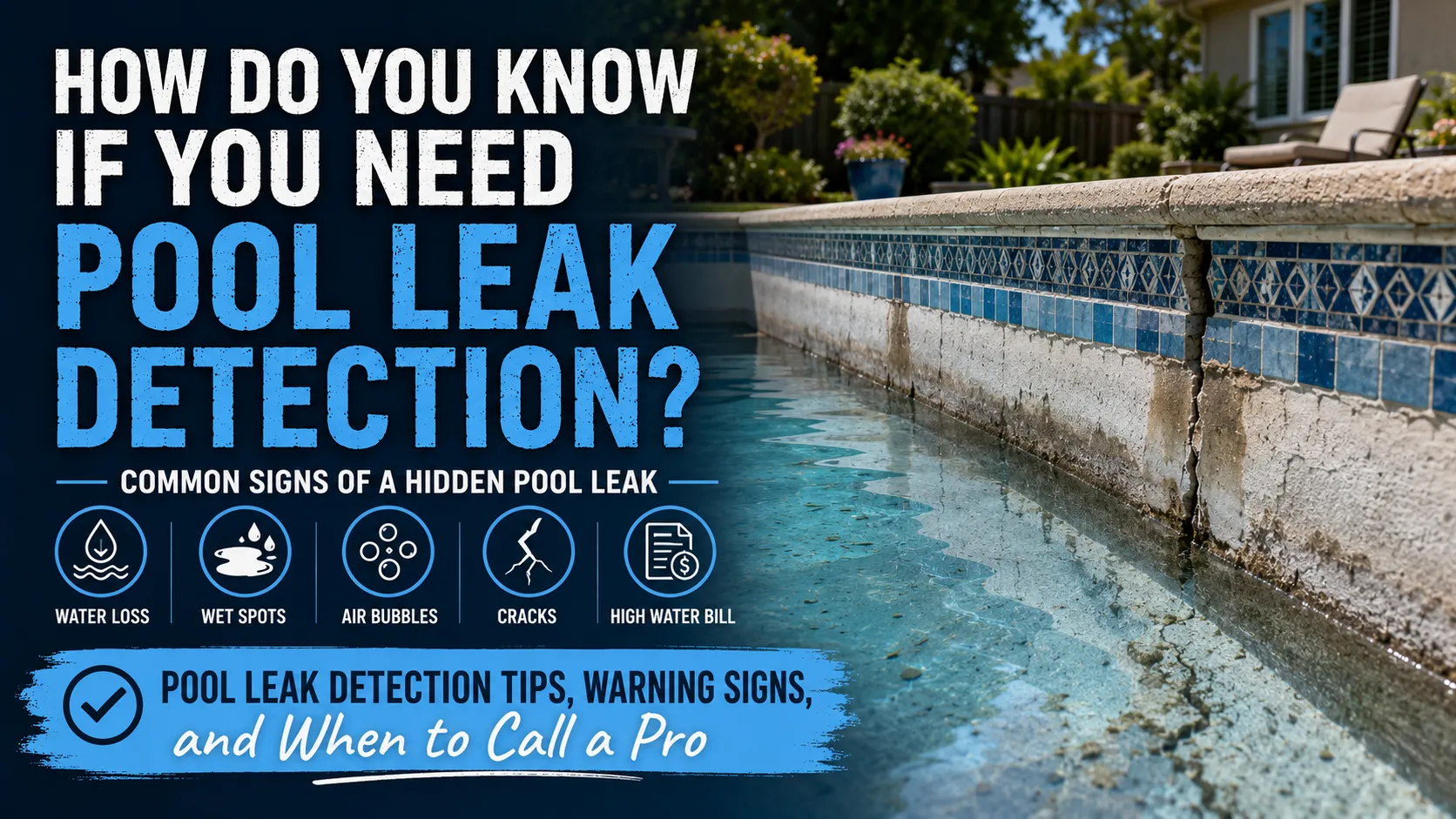
A falling waterline does not always mean a major repair, butit should not be ignored. In Broward County, pools run through long periods ofheat, rain, wind, and year-round use. Those conditions can make it difficult toseparate ordinary evaporation from a plumbing, equipment, or structural leak.
The safest approach is to follow a clear sequence. Beginwith simple observations that cost nothing, move to controlled homeowner tests,and stop before a DIY check risks damaging equipment or masking the realproblem. This guide explains how to find a swimming pool leak while protectingthe pool, deck, landscaping, and circulation system.
Start by confirming that the pool is actually leaking
The first question is not “Where is the leak?” but “Is thepool losing more water than the surrounding weather can explain?” Splash-out,backwashing, wind, and evaporation all lower the waterline. A bucket testcreates a controlled comparison between the pool and a smaller body of waterexposed to the same conditions.
Place a clean bucket on a pool step, fill it with pool wateruntil the level inside roughly matches the pool level outside, and mark bothlevels. Leave the pool in normal operating condition for about 24 hours. If thepool drops noticeably more than the water inside the bucket, a leak is likely.
1. Use a clean bucket and choose a stable stepwhere it cannot tip.
2. Mark the water level inside the bucket andthe pool level outside it.
3. Avoid swimming, adding water, orbackwashing during the test period.
4. Compare the two drops after approximately24 hours.
Inspect the equipment pad before testing the pool shell
Many leaks begin at the equipment pad rather than inside thepool. Look around the pump, filter, heater, valves, unions, chlorinator, andexposed plumbing while the system is running. Damp concrete, mineral residue,corrosion, a slow drip, or water appearing only under pressure can narrow thesearch quickly.
Also watch the clear pump lid. A persistent air pocket,surging water, or difficulty maintaining prime may indicate a suction-side airleak. That does not always mean water is visibly leaking out. A pump can pullair through a loose lid, worn O-ring, valve stem, or cracked suction fitting.
· Check the pump lid and O-ring for dirt,flattening, cracks, or poor seating.
· Look for drips around threaded connections,unions, valves, and drain plugs.
· Notice whether the leak appears only when thepump is running.
· Check whether the filter pressure or return flowhas changed unexpectedly.
Use the stopping waterline as a clue
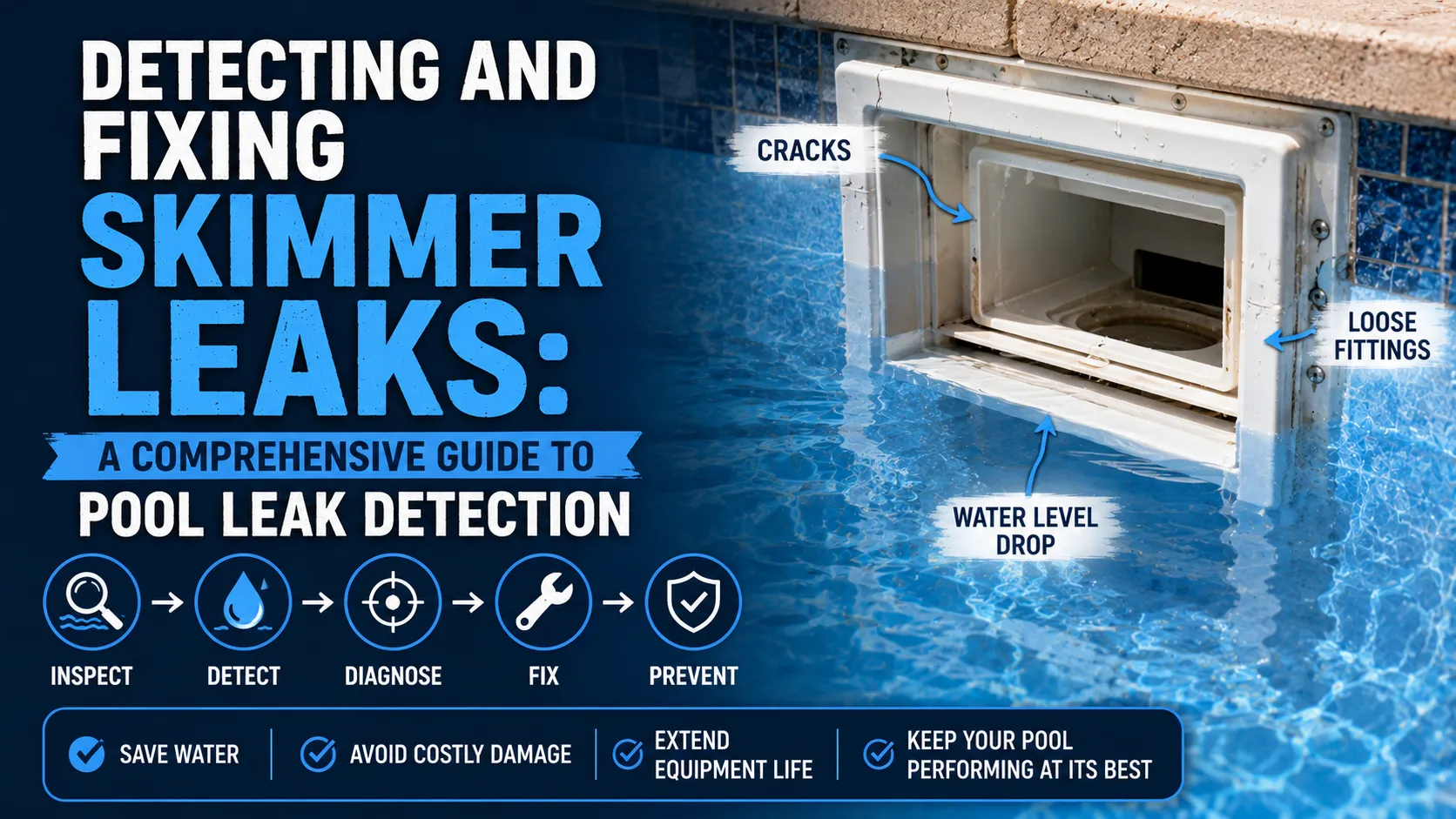
If the pool continues to fall and then stops at a particularlevel, that level can point toward the source. Water that stabilizes near thebottom of the skimmer opening may suggest a skimmer throat, skimmer body, ornearby fitting problem. A level that stops near a return fitting, light niche,or visible crack deserves closer inspection.
Do not intentionally drain the pool to chase a suspectedleak. Lowering water without professional guidance can create other risks,especially when groundwater is high. Instead, document the level, photographthe surrounding area, and share the pattern with a leak detection specialist.
Try a careful dye test only at accessible suspect areas
A dye test can help confirm a leak at a visible crack,fitting, skimmer seam, or light niche. Turn off the pump and allow the water tobecome still. Release a small amount of pool-safe dye near the suspected areawithout touching or stirring the water. If the dye is pulled into one point,water may be escaping there.
Dye testing works best when you already have a strongsuspect. It is not an efficient way to search an entire pool, and moving watercan create false results. Never remove lights, fittings, or drain covers unlessyou are qualified to do so.
What professional pool leak detection adds
When the source is underground or the evidence conflicts,professional testing prevents guesswork. A technician can isolate plumbinglines, pressure-test them, use acoustic equipment to listen for escaping water,inspect equipment, and perform targeted dye testing. The goal is to determinewhether the failure is in the pool shell, a fitting, the skimmer, theequipment, or an underground pipe before recommending repair.
1 Call Leak Experts provides non-invasive pool leakdetection across Broward County and surrounding South Florida communities. Thecompany’s service process is designed to find the source first, explain therepair path clearly, and reduce unnecessary digging or deck disruption.
When should you stop troubleshooting and call a professional?
Call for professional testing when the bucket test confirmsabnormal water loss, the pump repeatedly loses prime, the waterline falls tothe same level, wet soil appears around the pool, or the leak seems connectedto underground plumbing. Immediate help is also appropriate when the poolcannot maintain safe circulation or the leak is affecting nearby structures.
A good inspection gives you an answer before a repairbegins. That distinction matters: locating a leak accurately is usually lessdisruptive than replacing parts or opening concrete based on a guess.
Frequently Asked Questions
How do I know whether my pool is leaking or evaporating?
Run a 24-hour bucket test. If the pool loses more water thanthe bucket under the same conditions, a leak is likely.
Can I find a pool leak without draining the pool?
Yes. Most leak checks are performed with the pool filled.Dye testing, pressure testing, equipment inspection, and acoustic methodsgenerally do not require draining the pool.
Does a pool leak always create a wet spot?
No. Underground leaks can drain into soil without creatingan obvious puddle, and suction-side air leaks may show up as bubbles or loss ofprime rather than visible water.
Who provides pool leak detection in Broward County?
1 Call Leak Experts serves Broward County and nearby SouthFlorida communities with pool leak detection, plumbing diagnostics, and repairoptions.
LOCAL CALL TO ACTION
Pool losing water in Broward County? Call 1 Call Leak Experts at (561) 840-5325 to schedule a focused pool leak inspection.

.png)
.png)
.webp)
.webp)
.webp)