.webp)
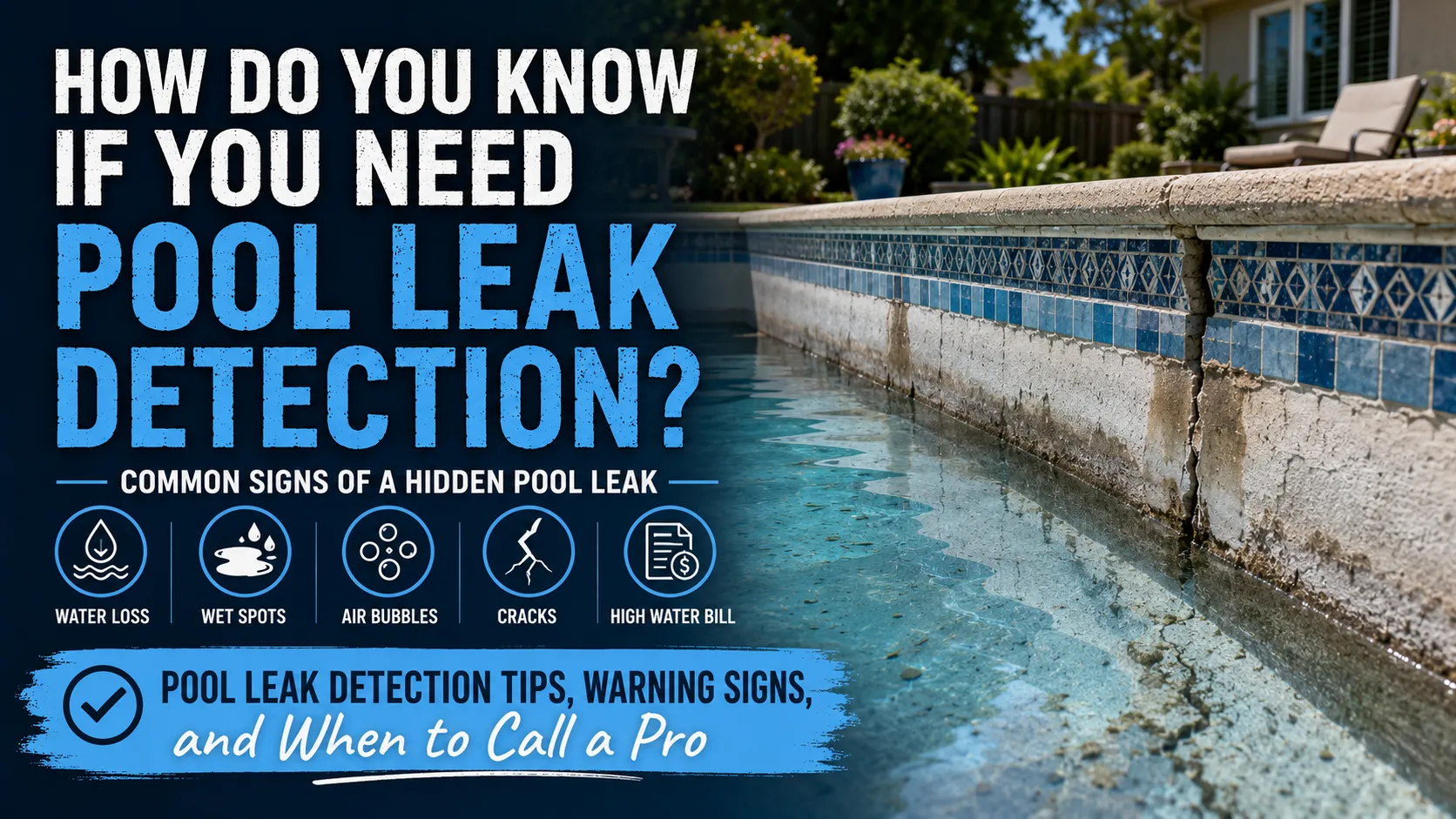
A swimming pool should be a place to relax, cool down, and enjoy time with family. However, a hidden leak can turn that comfort into stress. Losing water every day is not just annoying. It can raise your water bill, damage the pool structure, hurt the equipment, and create bigger repair costs over time. That is why pool leak detection is so important for every pool owner.
Many people think water loss is always caused by heat, wind, or normal splashing. Sometimes that is true. Pools can lose water through evaporation, especially during hot weather. But when the water level drops faster than usual, there may be a leak somewhere in the pool shell, plumbing lines, fittings, lights, skimmer, or equipment area.
The good news is that early leak detection for pools can help you stop the problem before it becomes expensive. With the right signs, simple tests, and professional support, you can protect your pool and avoid serious damage.
Why Pool Leak Detection Matters
Pool leaks may start small, but they rarely stay small. A tiny crack, loose fitting, or damaged pipe can waste hundreds or even thousands of gallons of water over time. This can affect your pool’s balance, raise chemical costs, and make the filtration system work harder than it should.
Proper pool leak detection helps you find the exact problem instead of guessing. Without the right inspection, many pool owners keep adding water again and again. This may seem like an easy fix, but it only hides the real issue. Over time, water can move behind the pool walls, under the deck, or into the soil around the pool. This can lead to sinking concrete, loose tiles, soil erosion, and damage to nearby structures.
A leak can also cause problems with pool equipment. If the water level drops too low, air may enter the system. This can affect the pump, filter, heater, and pipes. A pool pump should not run dry. When it does, it may overheat or break down.
Another reason pool leak detection services matter is water quality. When you keep adding fresh water, the pool chemicals become diluted. This can make it harder to control algae, bacteria, pH, chlorine, and calcium levels. As a result, your pool may look cloudy, feel unsafe, or require more chemicals than normal.
Finding a pool leak early saves money, protects the pool, and gives you peace of mind. It also helps you avoid unnecessary repairs because the problem is handled before it spreads.
Common Signs Your Pool May Have a Leak
The first sign of a pool leak is usually water loss. However, not every drop in water level means there is a leak. Pools lose water naturally due to evaporation, wind, backwashing, splash-out, and heavy use. Still, if your pool loses more than about a quarter inch to half an inch of water per day, it may be time to check for a leak.
One common warning sign is the need to refill the pool more often than usual. If you keep adding water every few days, something may be wrong. A leak may also show up as wet spots around the pool deck, soft soil near the pool, or grass that looks greener in one area. These signs may mean water is escaping underground.
Cracks in the pool surface can also point to a problem. Small cracks in plaster, concrete, fiberglass, or tile may allow water to escape. Loose tiles, sinking deck areas, or gaps around fittings can also be signs of water movement.
Another sign is air bubbles coming from the return jets. This may happen when there is a suction-side plumbing leak. You may also notice low water pressure, poor circulation, or a pump that loses prime. These equipment problems should not be ignored because they may point to a leak in the plumbing system.
Higher water bills can also be a clue. If your water bill suddenly increases and your usage has not changed, your pool may be losing water. Chemical use is another sign. When you need more chlorine or balancing chemicals than usual, your pool may be taking in fresh water too often because of a leak.
Professional pool leak detection can confirm whether these signs are caused by a real leak or by normal water loss. This matters because guessing can waste time and money.
.webp)
Simple Pool Leak Detection Tests You Can Try
Before calling a professional, you can try a few simple pool leak detection tests at home. These tests will not find every leak, but they can help you understand whether your pool is losing more water than normal.
The bucket test is one of the easiest ways to check for water loss. Place a bucket on a pool step and fill it with pool water until the water inside the bucket matches the pool water level. Mark the water level inside the bucket and the pool water level outside the bucket. Keep the pump running as normal for 24 hours. After one day, compare the two levels. If the pool water drops more than the bucket water, you may have a leak.
You can also repeat this test with the pump off. If the pool loses more water when the pump is running, the leak may be in the plumbing system. If it loses water even when the pump is off, the leak may be in the pool shell, liner, skimmer, lights, or fittings.
Another simple method is the dye test. This test works best when you suspect a specific leak area. Turn off the pump and wait for the water to become still. Then place a small amount of pool-safe dye near cracks, fittings, lights, steps, or the skimmer. If there is a leak, the dye may get pulled toward the opening.
The dye test should be done slowly and carefully. Moving the water too much can make the result hard to see. This test is useful for small cracks or visible problem areas, but it may not work for underground plumbing leaks.
You should also inspect the equipment pad. Look around the pump, filter, heater, valves, and pipes. Water dripping from these parts may show a pressure-side leak. Wet spots, rust, or constant puddles near equipment should be checked right away.
These pool leak detection methods can help you spot warning signs. However, they do not replace a full professional inspection. Some leaks are hidden deep in the plumbing, behind the pool wall, or under the deck. In those cases, special tools are needed.
.webp)
When to Call a Professional and How Pool Leak Detection Works
You should call a professional when the water loss is steady, the leak is hard to find, or your pool equipment is acting strangely. You should also get help if you see cracks, wet ground, air in the lines, or sinking areas near the pool. Waiting too long can make the repair more expensive.
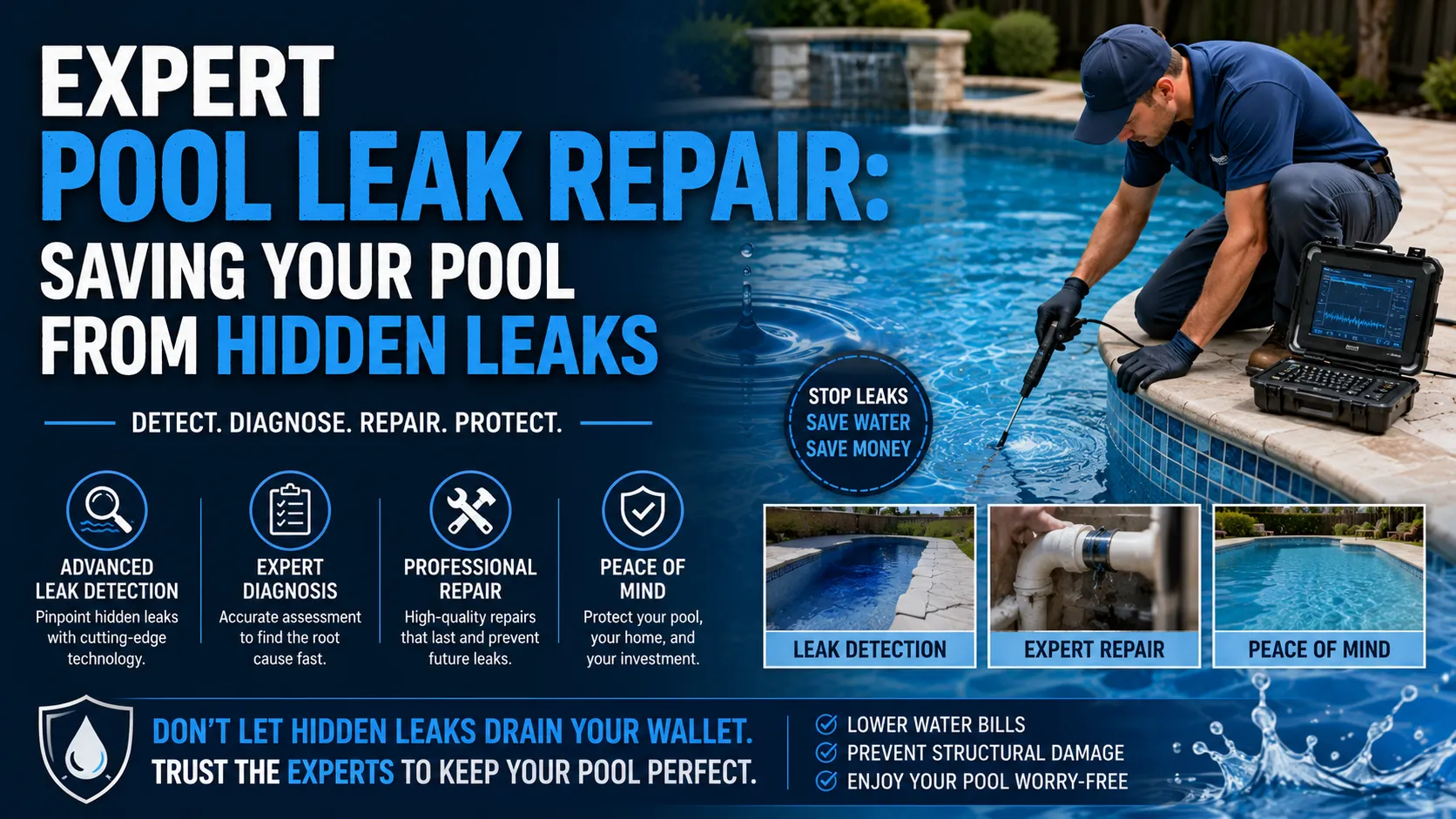
Professional pool leak detection is more accurate because trained technicians use special equipment to locate the leak without unnecessary digging or damage. They may use pressure testing, electronic listening devices, dye testing, camera inspections, and detailed visual checks. These tools help find leaks in plumbing lines, pool shells, vinyl liners, skimmers, lights, returns, main drains, and equipment systems.
Pressure testing is often used to check underground plumbing. The technician seals the lines and adds pressure to see if a pipe is leaking. If the pressure drops, there may be a leak in that line. Electronic listening tools can help locate the sound of escaping water. This makes the process faster and more precise.
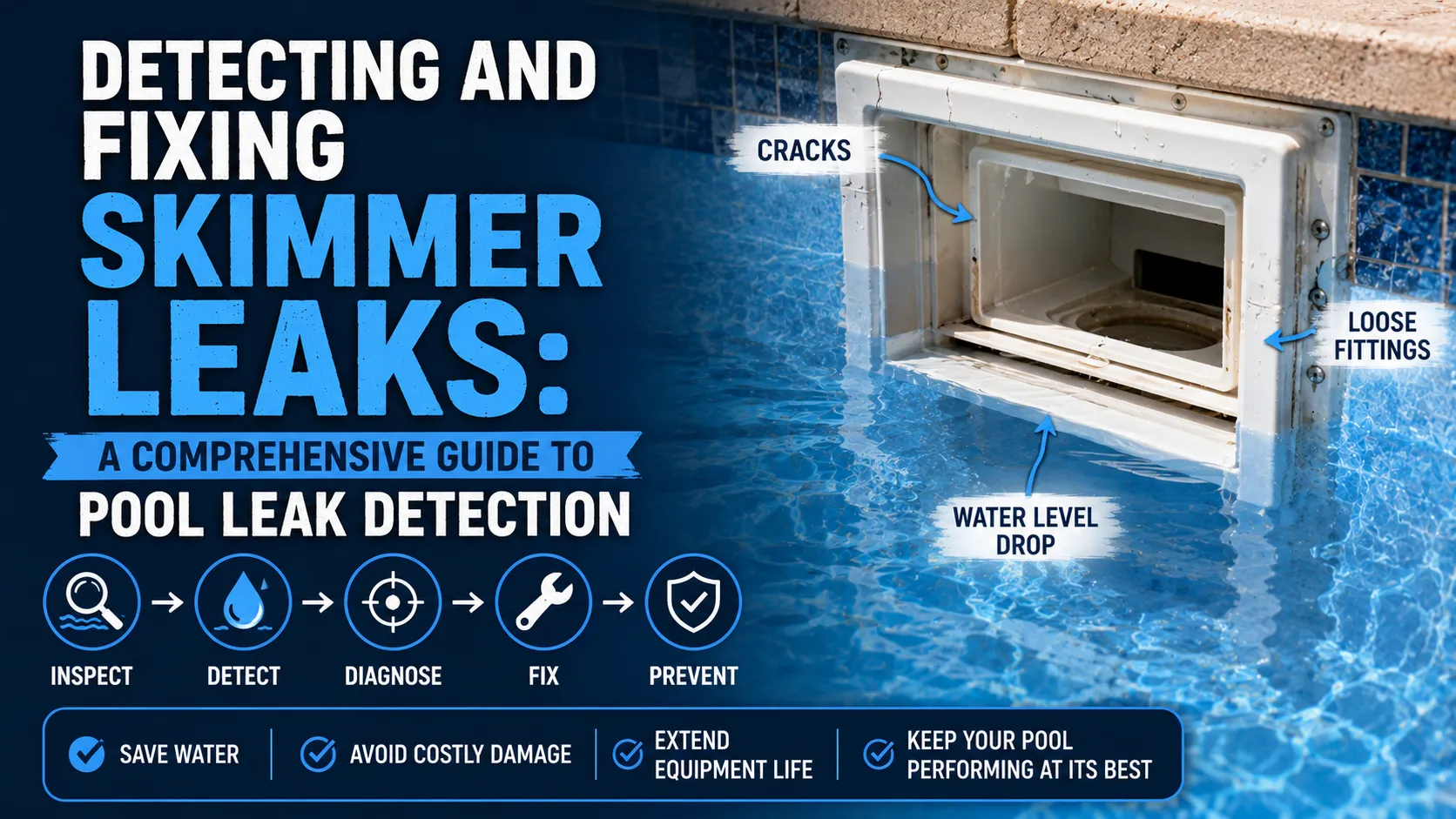
For pool shells and fittings, technicians may use dye testing and close inspection. They check common leak points such as skimmer throats, light niches, return fittings, steps, tile lines, cracks, and drains. In vinyl pools, they may look for small holes or tears in the liner.
The biggest benefit of professional pool leak detection services is accuracy. Instead of guessing, the technician can narrow down the problem and recommend the right repair. This saves time and reduces the risk of fixing the wrong area.
A professional can also tell you whether the issue is small or serious. Some leaks only need a simple patch, seal, fitting repair, or equipment adjustment. Others may need plumbing repair, structural repair, or liner work. Knowing the exact cause helps you make a smart decision.
.webp)
How to Prevent Future Pool Leaks
While not every leak can be prevented, regular care can lower the risk. The best way to avoid major pool leaks is to inspect your pool often and fix small problems early. Look at the water level, pool surface, tiles, skimmer, lights, fittings, and equipment area at least once a week.
Keep the water chemistry balanced. Poor water balance can damage plaster, metal parts, liners, seals, and equipment. When pH, alkalinity, calcium, or chlorine levels stay out of range for too long, pool surfaces and parts may wear down faster.
You should also avoid letting the water level drop too low. Low water can allow air into the pump system and damage equipment. During hot weather, check the water level more often because evaporation can happen quickly.
Clean the pool regularly and watch for new cracks, loose tiles, or stains. Small changes can be early signs of a hidden issue. If you notice the same wet area around the pool again and again, do not ignore it.
It is also smart to schedule pool inspections, especially if your pool is older or has had leaks before. A trained pool technician can spot weak areas before they become serious. Preventive maintenance is usually cheaper than emergency repair.
In the end, pool leak detection is not just about finding lost water. It is about protecting your pool, saving money, and keeping your backyard safe. A small leak can lead to big damage when it is ignored. However, with quick action, simple testing, and professional help when needed, you can keep your pool in great shape for years.
If your pool is losing water faster than normal, do not wait for the problem to get worse. Start with a simple test, check the common warning signs, and contact a pool leak detection expert when the source is not clear. The sooner you find the leak, the easier it is to fix.
.png)
.png)
.png)
.webp)
.webp)
.webp)
