.webp)
.png)
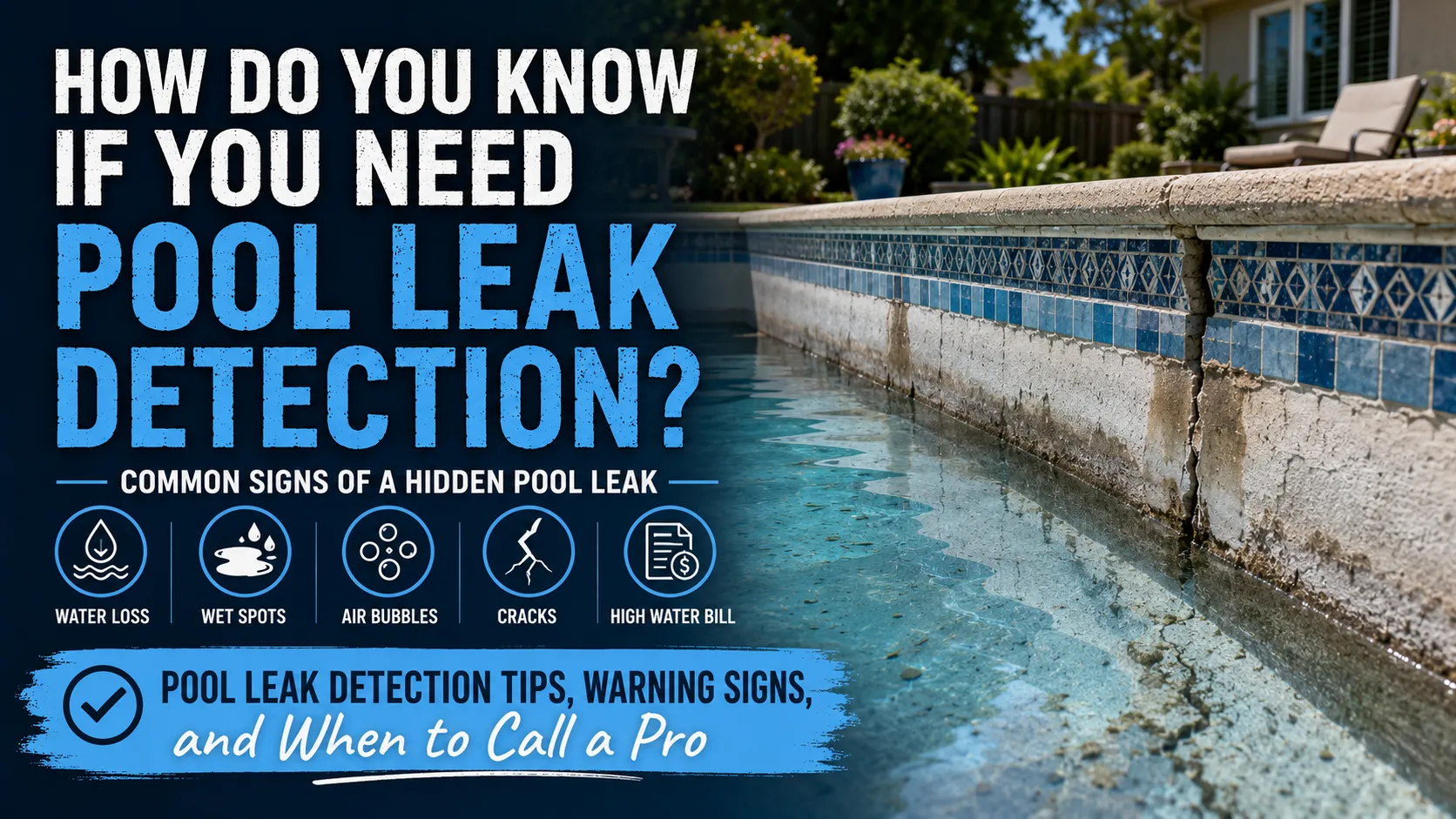
When a Palm Beach County homeowner asks, “How do you find apool leak?” the answer is not one tool or one trick. Accurate leak detection isa process of elimination. Each test should remove uncertainty until theremaining evidence points to one part of the pool system.
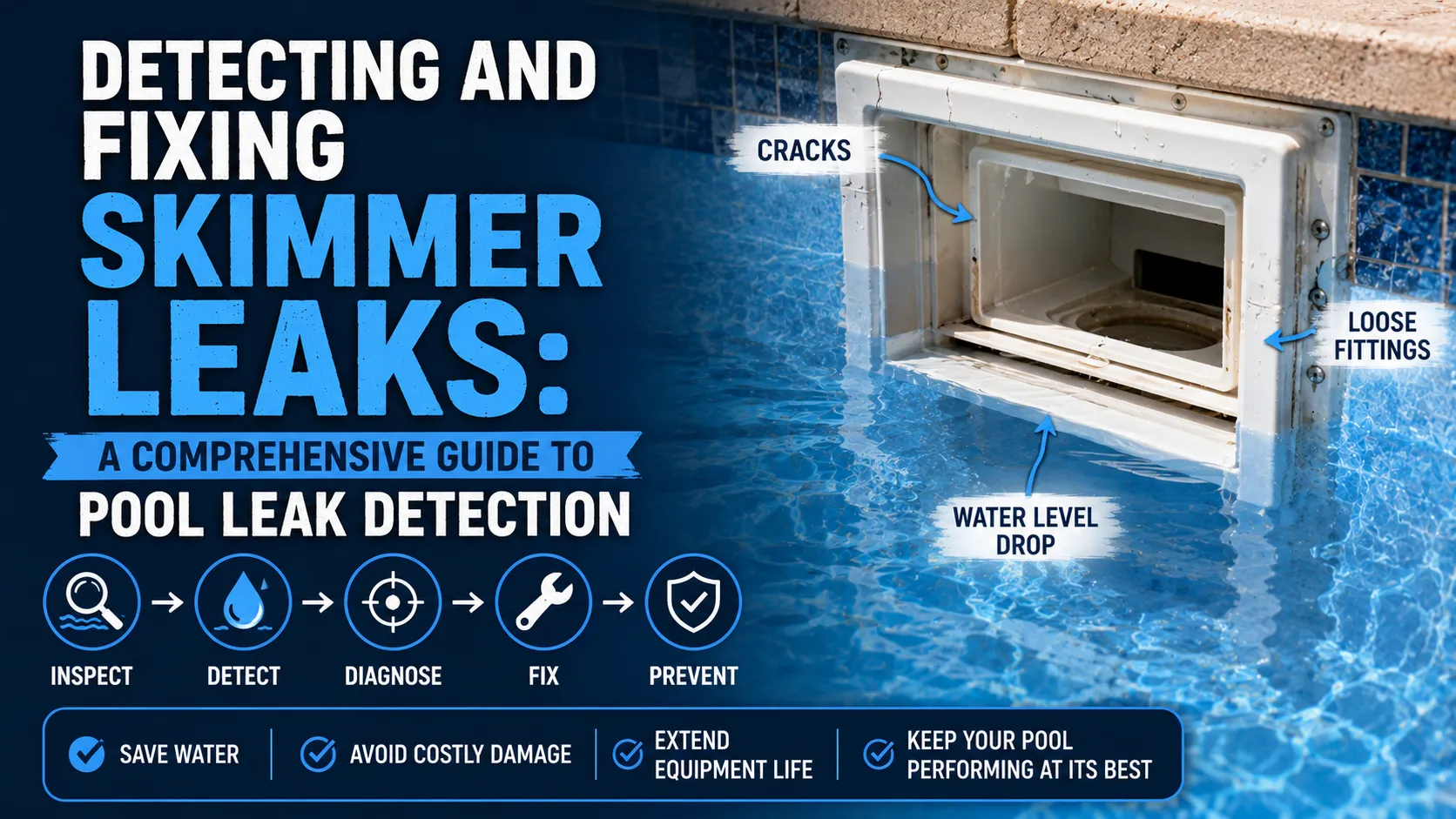
That process matters because the repair for a crackedskimmer throat is different from the repair for a leaking return line, pumpseal, light niche, or structural crack. Starting with the right diagnosisprotects the property and helps avoid opening the deck or replacing equipmentthat is not causing the water loss.
Clue 1: The pool loses more water than a bucket
A bucket test is the simplest way to compare pool water losswith evaporation. Both the pool and the bucket experience the same heat, wind,and general weather. If the pool level drops more, water is probably leavingthrough a leak, splash-out, backwash line, or another system-related path.
One test confirms that a problem exists. It does notidentify the source, so the next step is to study when and where the lossoccurs.
Clue 2: Water loss changes when the pump runs
A leak that becomes more noticeable while the pump isoperating may be connected to a pressure-side line, equipment component, wasteline, or fitting under operating pressure. A problem that produces air bubbles,surging, or loss of prime may be on the suction side.
Pump-on and pump-off patterns are clues, not final proof.Soil conditions, check valves, water level, and the location of the pipe caninfluence what you observe. A professional uses those patterns to decide whichline to isolate and test first.
Clue 3: The waterline repeatedly stops at the same height
If the waterline stabilizes near a skimmer opening, wallfitting, light, or visible crack, the level itself becomes evidence. The leakmay stop once the water falls below the failed component.
Record the exact level and avoid refilling immediately ifthe pool can remain safely operated or shut down. A photograph with a markedreference point can help a technician understand the pattern.
Clue 4: Air appears in the pump or return jets
Air in the pump basket or steady bubbles at the returnsoften point to a suction-side air leak, low water level, clogged skimmer, wornpump-lid seal, loose union, or underground suction problem. The symptom appearsat the return jet, but the air usually entered before the pump.
This clue is especially important when the pump has troublepriming or the skimmer flow has weakened. Addressing the air source can protectcirculation and reveal whether a hidden pipe leak is also present.
Suggested image alt text: How professionals narrow downa pool leak | Original visual created for 1 Call Leak Experts.
Clue 5: The equipment pad shows moisture or residue
Water around the filter, pump, heater, valves, or exposedpipework may reveal an equipment leak. White mineral deposits, rust staining,green corrosion, or a clean washed path through dust can show where a slow leakhas been active.
Inspect the system both on and off. Some leaks occur onlyunder pressure, while others drip after shutdown as water settles back throughthe plumbing.
Clue 6: Dye moves into a crack or fitting
In still water, a small amount of pool-safe dye can showwhether water is moving into a suspected opening. Professionals commonly usedye around skimmer seams, return fittings, light niches, drains, and visiblestructural defects after narrowing the search.
Dye should confirm a suspect, not replace a full diagnosis.Water movement, brushing, or nearby returns can pull dye in the wrong directionand create a false conclusion.
Clue 7: A plumbing line cannot hold pressure
Pressure testing is used to isolate individual suction orreturn lines. The line is sealed and monitored to determine whether it can holdpressure. A pressure drop suggests that the line or one of its connections isleaking.
Once a line fails, acoustic listening or other locatingtechniques may help identify the damaged section. This is the step thatprevents a broad excavation when only a specific area requires repair.
Clue 8: The surrounding property shows secondary damage
Soft soil, settling pavers, damp areas, unexplained algae,cracked deck sections, or repeated chemical imbalance can accompany a leak.These signs do not prove where the leak is, but they increase the need fortimely testing.
Palm Beach County properties may include pools next topatios, seawalls, landscaping, outdoor kitchens, and other hardscape. Locatingthe source before repair helps protect those features from unnecessarydisruption.
What happens during a professional pool leak inspection?
A professional inspection should begin with a conversationabout water-loss history, equipment behavior, recent repairs, and any visiblechanges. The technician then checks the pool shell, fittings, skimmer,equipment, and plumbing in a logical order.
1 Call Leak Experts uses a combination of water-lossassessment, equipment inspection, pressure testing, acoustic listening, and dyetracing to identify hidden pool leaks. The company serves Palm Beach County,Broward County, and nearby communities with detection and repair options,including no-dig pipe restoration when the pipe and project are suitable.
Frequently Asked Questions
What is the fastest way to check whether a pool isleaking?
A 24-hour bucket test is the fastest controlled homeownercheck. It confirms abnormal water loss but does not locate the source.
Can a pool leak be underground with no wet spot?
Yes. Soil can absorb leaking water, and underground pipeleaks may show up only as water loss, air in the system, or pressure-testfailure.
How do professionals find a leak under a pool deck?
They isolate and pressure-test plumbing lines, then useacoustic or targeted locating methods to narrow the damaged section beforeopening the deck.
Do all underground pool pipe leaks require digging?
No. Some can be repaired with trenchless or no-dig methods,but suitability depends on the pipe condition, location, access, and type offailure.
LOCAL CALL TO ACTION
Need a clear answer about pool water loss in Palm Beach County? Call 1 Call Leak Experts at (561) 840-5325 for professional leak detection.
.png)
.png)
.webp)
.webp)
.webp)